Showing posts with label nuclear. Show all posts

Thursday, June 2, 2011

Germany announces the phase-out of nuclear power


On May 30, the German government announced that all of Germany’s seventeen nuclear power stations would be permanently shut down by 2022.

Germany’s seven oldest nuclear power stations – temporarily switched off after public outcry and protests in the aftermath of the disaster in Fukushima – will remain offline, and will be permanently decommissioned.

An eighth plant
in northern Germany is already offline because of technical problems, and will remain shut down for good.Six of the remaining 9 power stations will be shut down in 2021, and the final three will be turned off in 2022.

"It's definite: the latest end of the last three nuclear power plants is 2022," Environment Minister Norbert Röttgen told reporters. "There will be no clause for revision."

The announcement has been greeted with critical support from anti-nuclear and environmental organisations such as Greenpeace, who have maintained their call for an earlier phase out date of 2015.

The announcement is not an entirely new proposition, either. In 2001, the then coalition government of the Social Democratic Party (SPD) and the German Greens passed legislation to phase out nuclear power in Germany by the end of 2021.

Sunday, April 3, 2011

Germany: Record demo, Green vote rejects nuclear power

The largest anti-nuclear protests in German history were held on March 26. About 250,000 people marched in Germany’s four largest cities.

Under the slogan “Fukushima Warns: Pull the Plug on all Nuclear Power Plants”, more than 120,000 took to the streets of Berlin, 50,000 in Hamburg, 40,000 in Köln and upward of 40,000 marched in München.

In state elections held the next day, the German Greens won a historic victory in Baden-Württemberg. They will form Germany’s first-ever Green-led government.

They also tripled their vote in elections in Rheinland-Pfalz.

Riding on widespread public opposition to nuclear power after the Fukushima disaster, the Greens doubled their vote to 24.2% of the vote in Baden-Württemberg.


Monday, March 28, 2011

Germany: Greens win historic electoral triumph


State elections on March 27 saw the German Greens win an historic victory in Baden-Württemberg – where they will form Germany’s first-ever Green-led government – and triple their vote in the Rheinland-Pfalz.

Riding on widespread public opposition to nuclear power in the wake of the Fukushima disaster, the Greens doubled their support to 24.2 percent of the vote in Baden-Württemberg.

The centre-left Social-Democratic Party (SPD) won 23.1 percent of the vote – a small drop on their 2006 result – while the conservative Christian Democratic Union (CDU) won 39 percent of the vote, down by over 5 points.

The CDU’s ruling coalition partner – the neoliberal Free Democratic Party (FDP) – lost more than half its support, dropping to 5.3 percent – barely enough to remain in the Landtag (state parliament).

The socialist party Die Linke (“The Left”), which took 24 percent in state elections in the eastern state of Sachsen-Anhalt on March 20, won only 2.8 percent of the vote – not enough to enter parliament.

The results mean that Baden-Württemberg will be governed by a Green-SPD coalition, led by the Greens’ Winfried Kretschmann – a founding member of the party in Baden-Württemberg and now the first ever Greens state Minister-Präsident (Premier).

Friday, March 18, 2011

Germany: Protests force nuclear closures after Fukushima disaster

Facing public outrage and concern over the nuclear meltdown unfolding in Japan, German Chancellor Angela Merkel has announced the temporary shutdown of several of that country's nuclear reactors.

On March 12, over 60,000 anti-nuclear protesters in the south-western state of Baden-Württemberg formed a 45 kilometre human chain,
stretching from Stuttgart to the Neckarwestheim 1 nuclear plant.

Smaller protests took place in more than 450 towns and cities across Germany, according to anti-nuclear organisation "Ausgestrahlt" (Irradiated), and more protests are planned for March 26.

Merkel responded by announcing on March 15 that all 17 German nuclear plants would undergo safety checks. Of these, the oldest seven – all of which began operating before 1980 – would be shut down for three months, beginning immediately with the Isar 1 power plant in Bavaria.

Two of the seven older plants are already shut down – one is undergoing maintenance, while the other was taken offline in 2007 after an accident.


The move has been criticised by anti-nuclear groups and opposition parties as inadequate, and as a cynical, dishonest manoeuvre, designed only to arrest the desperate decline in support for Merkel’s ruling part, the Christian Democratic Union (CDU).

Friday, November 19, 2010

Germany's ‘hot autumn’ of protests

Germany’s centre-right government is facing what many have dubbed a “hot autumn” of protests, as conflict over a range of social, political and environmental issues come to a head across the country.

As the governments of Europe attempt to offload the costs of the financial crisis onto working people, German Chancellor Angela Merkel has initiated a series of “austerity” measures aimed to undermine Germany’s social welfare system.

About 100,000 trade unionists took to the streets on November 13 to protest cuts to social welfare, including government plans to raise the pension age from 65 to 67.

On November 15, Merkel was successfully re-elected leader of her party - the right-wing Christian Democratic Union (CDU) - with the support of over 90 percent of the party conference.
Facing criticism from the party's influential right-wing, Merkel has shifted her rhetoric rightwards, claiming that multiculturalism had "utterly failed", and calling on Germans to return to their "Judeo-Christian values".

The day before the CDU conference began, tens of thousands of protesters in Stuttgart, Dortmund, Nürnberg and Erfurt came out to oppose her government’s cuts.

Minister for labour Ursula von der Leyen has tried to defend the attack on pensions. Claiming it was necessary because of Germany’s low birth rate and high life expectancy, Von der Leyen described the move as “a question of fairness”.

Protesters, led by Germany’s largest union IG Metall, rejected the claim. They condemned the changes as an attack on working people designed to maximise corporate profits during the German economy’s current upswing.

Berthold Huber, head of IG Metall, told demonstrators in Stuttgart: “We don’t want a republic in which powerful interest groups decide the guidelines of politics with their money, their power and their influence.”

German activists blockade nuclear train

More than 50,000 German anti-nuclear protesters defied 17,000 police over the weekend of November 6 and 7 to blockade a train carrying spent nuclear fuel rods from France to Germany.

On November 8, the fuel rods finally reached the small north German village of Dannenberg. From there, they were trucked a further 20 kilometres to an interim nuclear storage facility in the town of Gorleben.

Anti-nuclear activists drove more than 600 tractors, blockading roads and the railway in the largest ever demonstration over the transportation of spent nuclear fuel rods in Germany.

The nuclear train was stopped for several hours as local residents, unions, politicians, environmental groups, football clubs, farmers and protesters from across Germany occupied the railway tracks.

Friday, October 15, 2010

Germany: Two party system unraveling

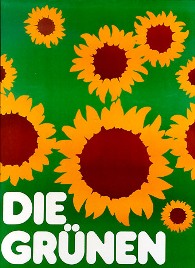
Coasting on the back of environmental protests and a hemorrhaging two-party system, the German Greens have sent shock waves through German politics, surging into the position of main opposition party for the first time.

The Greens, who were part of a coalition government with the Social Democratic Party (SPD) from 1998-2005 at the expense of many of the party’s principles, are benefiting from the unraveling of Germany’s tradition two-party system.

Nevertheless, the two major parties - the centre-right Christian Democratic Union/Christian Social Union coalition (CDU/ CSU) and the centre-left SPD - retain a monopoly over government in Europe’s biggest economy.

But the facade appears to be truly falling apart at last. Opinion polls in early October put the Greens on 24%, one point ahead of the SPD.

At the 2009 federal elections, the Greens scored 10% of the vote. The far-left Die Linke won 11.9%.

In recent polls, the governing CDU were at 32%, while their neoliberal fundamentalist Free Democratic Party (FDP) allies only reached 6%. Die Linke remained steady on 11%.

The Greens’ poll surge comes amid a rise in environmental and community protests.